Benefits enrollment season has a reputation for being stressful.
But here’s the truth: enrollment season doesn’t have to be chaotic. Most of the headaches happen because the prep gets pushed off until the last minute.
When you give yourself enough time to review what worked, make thoughtful decisions, communicate clearly, and get your process organized, enrollment becomes much more manageable for you and your employees.
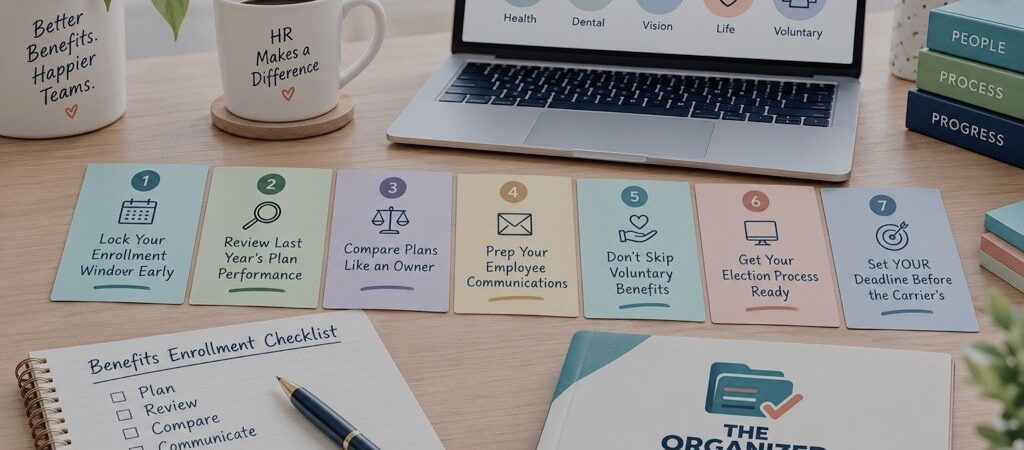
Here are seven steps to help you get ahead this enrollment season.
1. Lock Your Enrollment Window Early
Before you get into the details, get your dates on the calendar.
Decide when enrollment will open, when it will close, and when employees need to have their elections completed. Then work backward from your effective date to make sure you have enough time for carrier requirements, corrections, and follow-up.
Don’t leave your enrollment window to chance. The earlier you establish your timeline, the easier it is to communicate expectations and keep everyone on track.
2. Review Last Year’s Plan Performance
Before automatically renewing what you had last year, take a look at how your current benefits actually performed.
Consider:
● How much did premiums increase?
● What did employees actually use?
● Were there recurring questions or complaints?
● Which plans had the most participation?
● Did employees struggle to understand certain benefits?
● Were there issues with claims, providers, or administration?
Last year’s experience gives you valuable information for making this year’s decisions.
Don’t just ask, “What does the renewal look like?” Ask, “Is this still the right benefits strategy for our employees and our organization?”
3. Compare Plans Like an Owner
Benefits decisions aren’t just about finding the lowest premium.
Look at the bigger picture: employee needs, employer costs, plan design, deductibles, out-of-pocket exposure, network access, and the overall value of the package.
Think like an owner making an investment decision.
What are you paying for, what are your employees getting, and does the value justify the cost?
A side-by-side comparison can make it much easier to see where a plan is strong, where it falls short, and where you may have opportunities to make changes.
4. Prep Your Employee Communications
One of the easiest ways to make enrollment stressful is to assume employees will simply “figure it out.”
THEY WON’T … and that’s okay.
Your job is to make the information as clear and accessible as possible.
Before enrollment opens, prepare your emails, guides, FAQs, meeting materials, and reminders. Explain what’s changing, what’s staying the same, what employees need to do, and **most importantly** – when they need to do it.
The goal isn’t to overwhelm employees with benefits jargon. It’s to give them the information they need to make informed decisions.
5. Don’t Skip Voluntary Benefits
Medical, dental, and vision may get most of the attention, but don’t forget about your voluntary benefits.
Life insurance, disability, accident, critical illness, hospital indemnity, legal services, identity protection, and other voluntary offerings can add meaningful value to an employee benefits package.
Enrollment season is an opportunity to remind employees about benefits they may have forgotten, or never fully understood.
Take a fresh look at what you’re offering and determine whether those benefits still make sense for your workforce.
6. Get Your Election Process Ready
A great benefits strategy can still turn into a headache if the election process isn’t ready.
Before enrollment opens, test your system and make sure you know exactly how employees will enroll, waive coverage, add dependents, make changes, and submit elections.
Also think through what happens when something goes wrong.
Who handles questions? How will corrections be submitted? What happens if an employee misses the deadline? How will you confirm that elections were successfully completed?
A smooth enrollment process is built before enrollment begins, not while you’re troubleshooting it.
7. Set YOUR Deadline Before the Carrier’s
This one can save you a lot of stress.
Don’t make the carrier’s deadline your internal deadline.
Give yourself a buffer.
If the carrier needs final enrollment information by a certain date, set your employee deadline earlier. That gives you time to follow up with employees who haven’t completed their elections, resolve issues, review the information, and make corrections before everything is due.
That extra breathing room can be the difference between a smooth enrollment and a last-minute scramble.
Make This Enrollment Season More Organized
Benefits enrollment doesn’t have to feel like a fire drill every year.
The key is preparation: set your timeline, review your results, evaluate your options, communicate early, and build in enough time to handle the unexpected.
And if you want a simple way to keep all those moving pieces organized, grab the Benefits Enrollment Checklist at theorganizedhrpro.com.
Because the best way to survive enrollment season is to stop treating it like a last-minute event, and start treating it like a process you can plan for.